


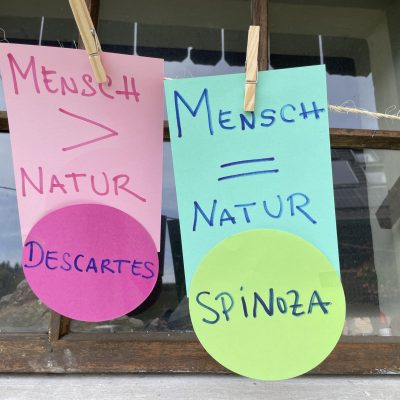
There have always been two camps. One was driven by greed, seeking to exploit the Earth, forests, bodies and the future itself. In 1492, Paulus Niavis brought Mother Earth before a court: plundered, wounded, violated.
And there has always been another camp: people determined to tread lightly, nurture and preserve ecosystems, and pass on the foundations of life to future generations.
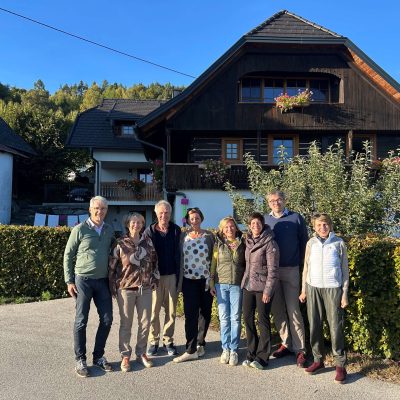
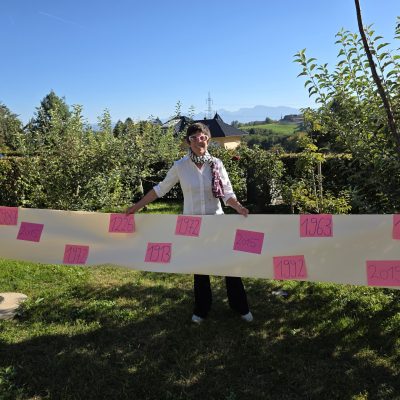
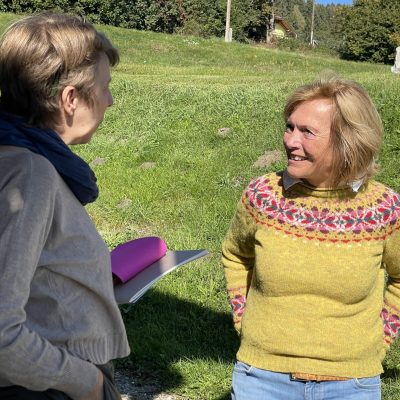
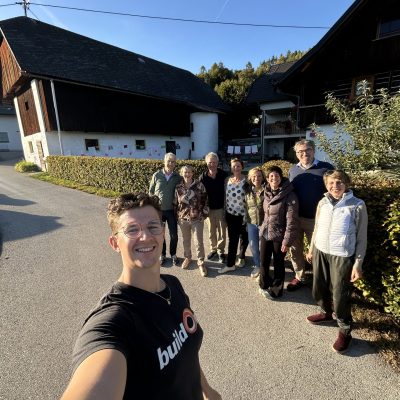
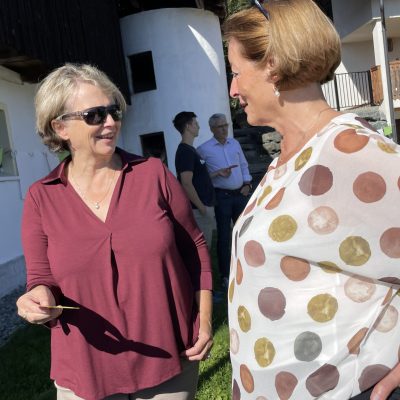
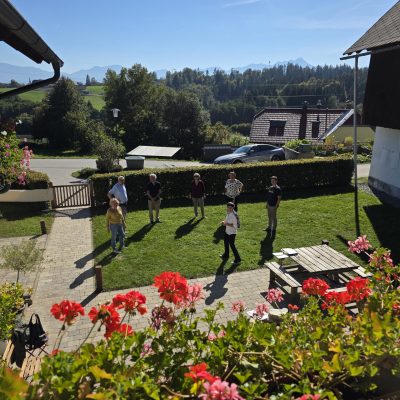
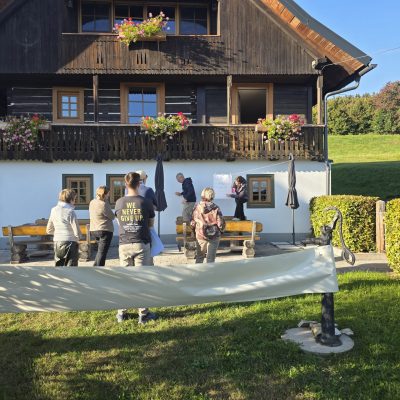
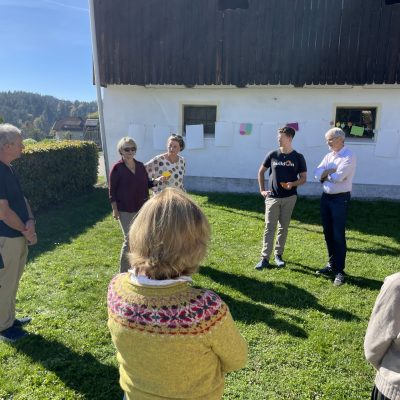
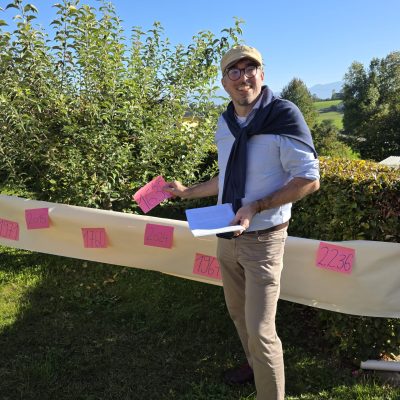
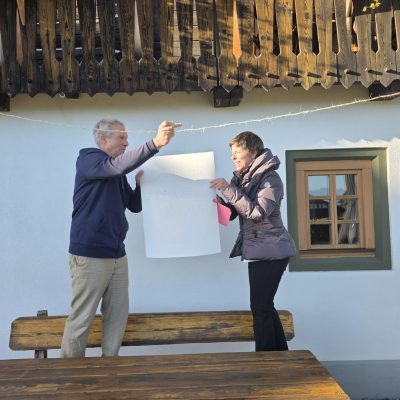
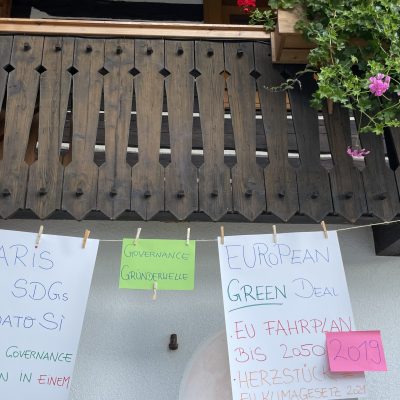
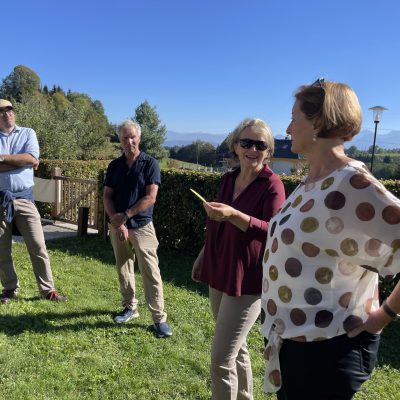
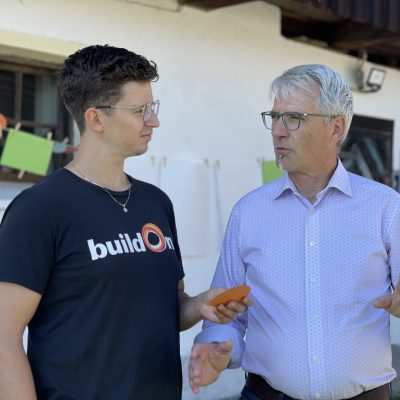
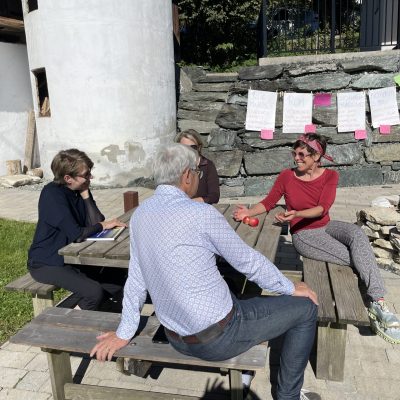
We explored this tension – at times outright confrontation – in a literal, open-air parcours. Our exceptionally perceptive guests brought their own stories, insights and lived experience of the German-Slovenian borderland to the conversation.
We traced the roots of these ideas.
1. Think globally, act locally.
The local is neither a niche nor an inferior place. It is where abstract ideas become tangible and alternatives become imaginable. Practise hands-on action, take it seriously, nurture it – and, wherever possible, organise it collectively.
2. Persevere and nurture hope, contact, trust.
When a wave seems about to break over us, swim deep beneath it. Better still, swim together.
Looking back, we find that major upheavals have often been preceded by capillary networks: inconspicuous, persistent and interconnected. From the Spinozists to the people who gathered every Monday for years at Leipzig’s St Nicholas Church, before the Berlin Wall fell in 1989.
Resistance rarely begins with a roar. It begins in spaces that no one yet considers important
3. Whenever you have the influence to do so, build structures.
Build infrastructure wherever you can. Foundations, buildings, binding agreements, institutions that outlast the next news cycle. Foundations dedicated to the common good, in particular, have often proved resilient because they anchor responsibility across generations.
Building structures is painstaking, incremental work, much of it invisible. A long way from Instagram. And precisely for that reason, so effective.
What if the future has been imagined for far longer than we think?
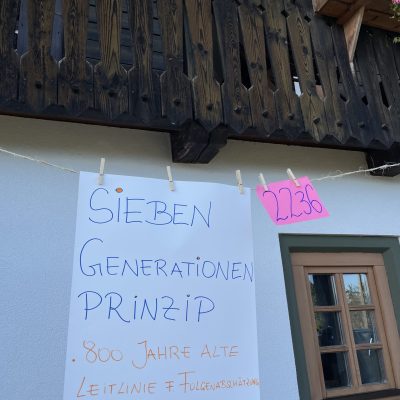
The Canticle of the Sun by Francis of Assisi, which addresses the sun, wind, water and earth as brothers and sisters, bequeathing to us an ecological manifesto some 800 years old.
Hemma of Gurk, who, around a thousand years ago, chose not to consume her wealth but to invest it in education and long-term endowments for forest management.
Rachel Carson, whose Silent Spring revealed how poison travels through food chains and what human actions lie behind the silence in the woods. It also reminds us how disastrous the silence of well-meaning but passive supporters can be.
And Angela Piskernik: botanist, the first Slovenian woman from Carinthia to earn a doctorate in the natural sciences, resistance fighter, Ravensbrück survivor and pioneer of transboundary nature conservation. Her vision of a nature park spanning the Karawanks lives on in the Karawanken UNESCO Global Geopark, the European Green Belt and the idea of European cooperation. Her story connects science, civic courage, women’s history and peace history with biodiversity.
Venice, too, has a story to tell: a city whose power and prosperity depended on timber, which appointed people to oversee its forests – yet ultimately learned that resource policy fails without the knowledge and involvement of local communities.
The Peace Palace in The Hague brings us back to Bertha von Suttner, international law, the Earth Charter and SDG 16. Without peace, justice and strong institutions, there can be no effective policy for our planet.
And the European Green Deal? It is by no means a bureaucratic monster. It is a far-sighted opportunity and a roadmap for European ecosystems, resilience and preventive security policy.
Our parcours was dense with ideas, yet lively and engaging. Three lessons emerged.
What if we become aware of our very own possibilities, here and now?
What participants took away from our parcours was more than a journey into history. It was a shift in perspective.
💡 Sustainability is not an invention of our time. Visionary ideas about how human beings can live with nature run through the centuries, often carried forward by courageous individuals – including many women who were ahead of their time.
🌱 Prepare the ground for light in dark times. Provocation and confrontation have always existed. So has the search for solutions. What matters is staying the course and developing ideas further, even when the work takes place for years in unassuming spaces.
✨ Those dismissed as dreamers are tomorrow’s pioneers. Visionary ideas are often underestimated. Yet they may be precisely what we need to safeguard the future of our world.
🎨 Culture moves people long before anything else changes. It acts like a seismograph, making connections and contradictions visible, opening up new perspectives and giving vital impetus to debates on social change and governance.
🌍 How can we translate this knowledge into the future today? Through a bioregional perspective on the Karawanks, for instance; through regional learning spaces and living labs; and through new forms of shared responsibility and collective financing.
A heartfelt thank you to everyone who joined us on this parcours and brought their curiosity, experience and ideas. Thank you for the evening before the opening with the remarkable philosopher, journalist and musician Sibyl Urbancic. Thank you to Verein Interferenzen for the invitation, and to author Ulrich Grober (oekom and Antje Kunstmann publishers) for his books and for the opportunity to carry his ideas forward.
Because those who build the structures for a different future help make that future possible.
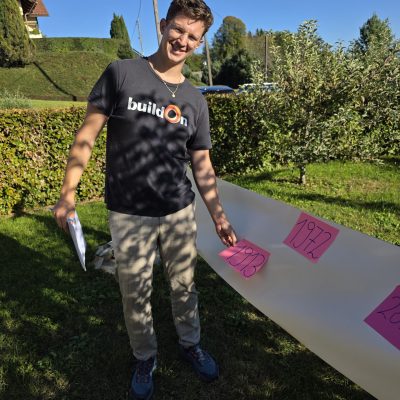
© Photos: Verein Interferenzen & AGORA European Green Deal