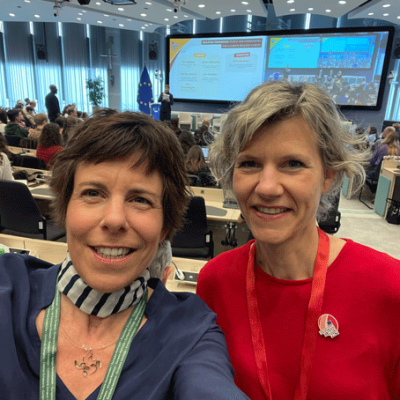
Launched by the European Commission in 2020, the European Climate Pact brings together committed people from across Europe who work—professionally or voluntarily—on climate and nature protection, as well as regional development and transformation. It focuses on sharing experience, learning from one another, and developing joint ideas for the ecological transition.
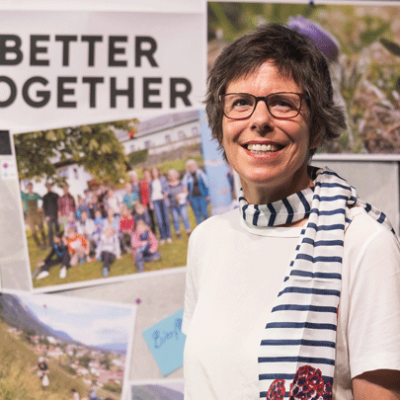
In conversation with journalist Juliane Nagiller, Verena Ringler—director of AGORA EGD in Innsbruck and Ambassador for the European Climate Pact—described the value of the network:
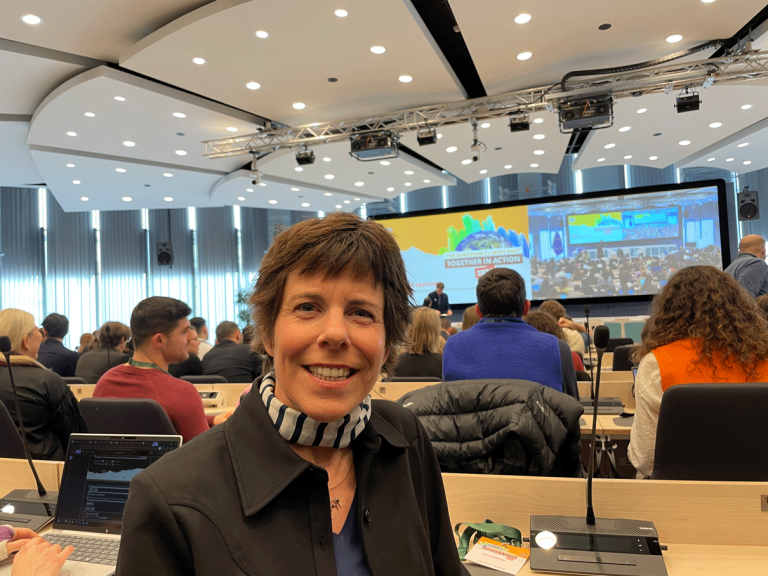
The EU Climate Pact is a professional network of local transition and regional development practitioners. A network for the future.
Verena Ringler
In conversation with journalist Juliane Nagiller, Verena Ringler—director of AGORA EGD in Innsbruck and Ambassador for the European Climate Pact—described the value of the network:
“What interested me so much about this Pact was that it is a network for the future. The EU brings together many hundreds of professional innovators, multipliers and change-makers to reflect jointly on their experiences and on prospects for climate and nature transformation.”
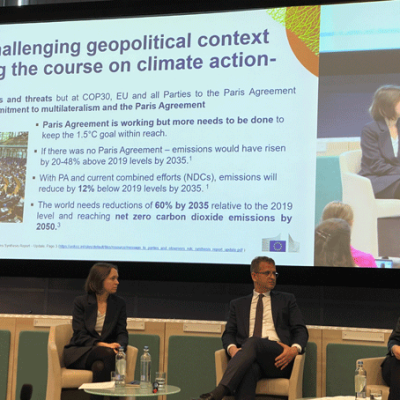
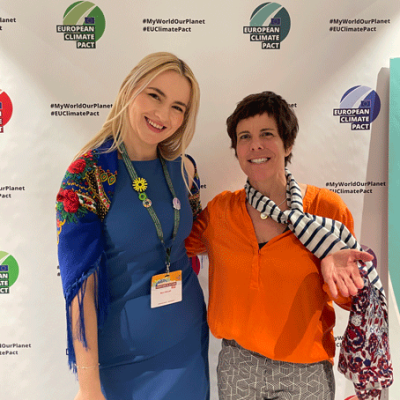
A notable feature of the Climate Pact, Ringler explained, is that it relies less on direct financial support than on connections and innovation—especially through an annual gathering in Brussels. “The Commission says: in this case, we do not have dedicated budgets. But we have what is known as convening power. As the EU, we can bring you together so that you can meet and exchange ideas.”
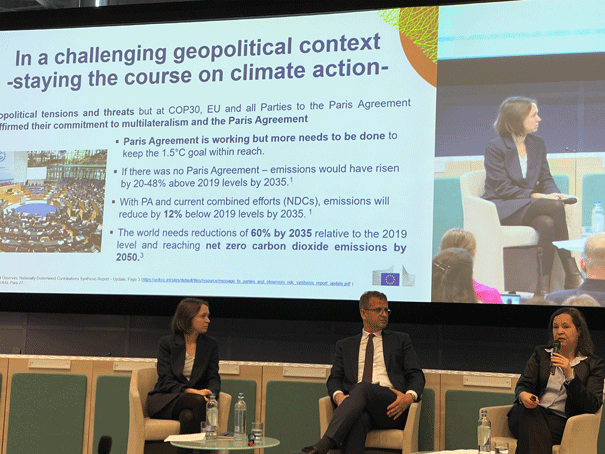
The EU says: We may not have funding for you ambassadors. But we do have the convening power. We can bring you together.
Verena Ringler
The European Climate Pact was launched in 2020 as part of the European Green Deal roadmap. Today, it serves as a professional network for practitioners working on climate and environmental issues, regions, and local economic development. Its members are expected to help advance the EU’s objective of climate neutrality by 2050, drawing on the commitment of innovative civil society actors and practitioners, volunteers and visionaries.
As Ringler put it in the Ö1 feature: “You can think of this Climate Pact as a long-overdue professional network of experienced people who are making a difference in the places where they live and work.”
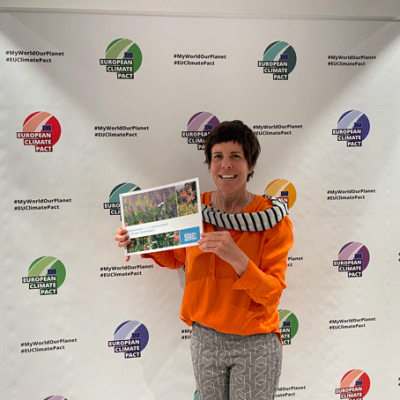
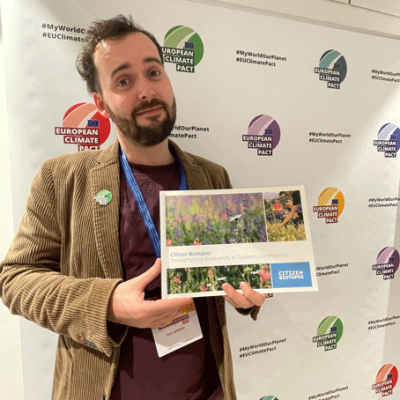
The exchange within the network also leads to innovation and tangible cooperation. At the 2026 annual meeting in Brussels for instance, Ringler introduced numerous colleagues to the pioneering project Citizens’ Biotopes Tyrol, to which she had contributed through the association AGORA European Green Deal. Under the leadership of the Tyrolean Environmental Ombudsperson’s Office, citizens worked with researchers and representatives of local businesses, agriculture and municipalities over several seasons to create 38 biotopes for endangered plant species. They now continue to care for these sites in self-organised teams.
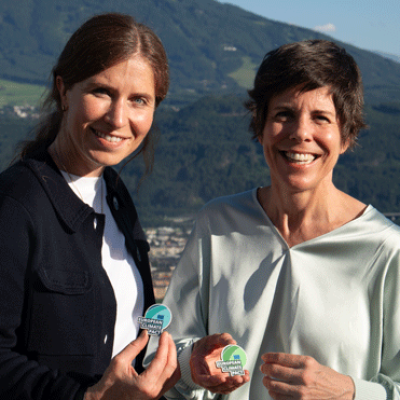
After the 2025 annual meeting, Ringler brought two changemakers to Austria whom she first met through the Pact: a German expert on biodiversity and business, and an artist from the Netherlands. The Climate Pact thus illustrates how European networks can promote not only the exchange of knowledge, but also concrete local projects and collaborations.
The programme is available through the Ö1 podcast Nachhaltig leben and on major podcast platforms.
#MyEUClimatePact #EUClimatePact #ruleoflaw #FFH #BiodiversityMatters